No Label, No Problem: How a New Wave of Artists Is Writing Their Own Rules in 2024
Not that long ago, the path to a music career looked pretty much the same for everyone who wanted one. You played shows, you hustled, you sent demos, you waited for someone with power to decide you were worth betting on. The gatekeepers held the keys, and if they weren't interested, you were largely out of options.
That system isn't gone. But it's cracking, loudly, and the people doing the cracking are artists who decided they didn't need permission.
The Old Model and Why It's Losing Its Grip
To understand what's changing, you have to understand what the traditional model actually cost artists — not just financially, but in terms of creative control and autonomy.
A standard major label deal historically gave the label ownership of master recordings, significant control over release schedules, creative direction, and marketing decisions, while advancing money to artists that had to be recouped before any royalties were paid. An artist could sell a genuinely impressive number of records and still technically owe the label money.
For decades, artists accepted these terms because the alternative — doing it yourself — was logistically and financially impossible. Pressing physical records, getting radio play, securing distribution, funding music videos: all of it required infrastructure that only labels had.
Then the internet happened. Then smartphones happened. Then social media happened. And then, slowly at first and now very quickly, the infrastructure became accessible to anyone with talent and the willingness to figure it out.
The Platforms That Changed Everything
The list of tools available to an independent artist in 2024 would have been genuinely unbelievable to a musician in 2004. Let's actually run through it, because the scope of it matters.
Distribution: Services like DistroKid, TuneCore, and CD Baby let artists put their music on every major streaming platform — Spotify, Apple Music, Tidal, Amazon Music — for a flat annual fee. No label required. No percentage of royalties surrendered.
Direct fan monetization: Bandcamp lets artists sell music directly to fans and keep the vast majority of the revenue. Patreon allows musicians to build subscription-based communities where fans pay monthly for exclusive content. Substack has become a surprising home for artists who want to write directly to their audience.
Social discovery: TikTok has become the most powerful song discovery engine on the planet, and it doesn't care about your label deal. A song can go from obscurity to millions of streams based entirely on organic fan behavior. The same is true, to varying degrees, of Instagram Reels, YouTube Shorts, and even Twitter/X.
Live performance booking: Platforms like Bandsintown and Songkick help independent artists connect directly with fans for live shows, and the rise of house concerts and intimate ticketed events has created revenue streams that didn't exist before.
Taken together, these tools represent something genuinely new: a complete music business infrastructure that's available to any artist, at any stage, for a fraction of what it used to cost.
Artists Who Are Actually Doing It
This isn't theoretical. There are artists building real, sustainable careers right now without ever signing to a major.
Take Daine, an Australian-American hyperpop artist who built a cult following almost entirely through Tumblr and SoundCloud before landing on streaming platforms. Or Chloe Moriondo, who grew from a ukulele-playing YouTuber to a signed artist on her own terms, with enough leverage from her existing fanbase that she could negotiate deals that preserved her creative vision.
Or look at artists like Rini, Emotional Oranges, or Benson Boone — all of whom built significant audiences through social platforms and used that traction to either stay independent or enter industry relationships from a position of strength rather than desperation.
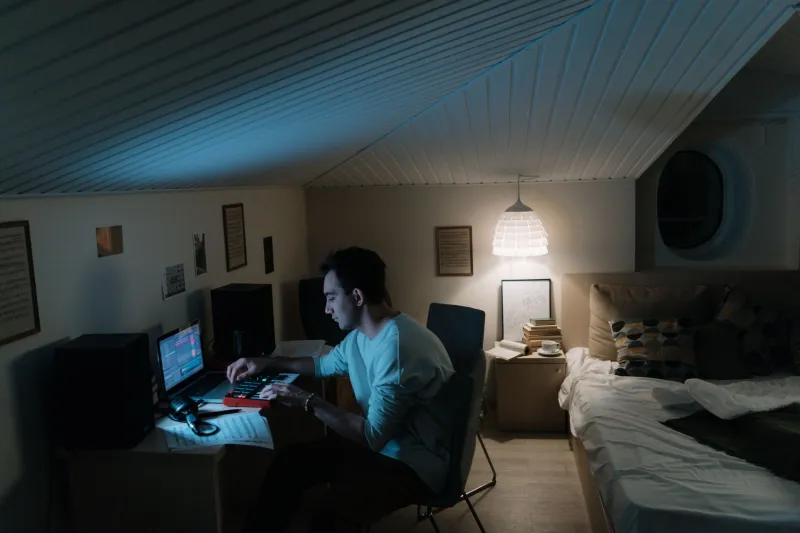
Marco Rivera, a 26-year-old bedroom pop artist from Chicago who releases music under the name "Glass Static," has been building his career independently for three years. He's never had a label deal, never had a manager, and last year made enough from streaming, Bandcamp sales, and a modest touring schedule to quit his day job.
"The thing people don't understand is that you don't need a million streams to make a living," he told us. "You need a few thousand people who actually care. Like, really care. Those people will buy your merch, come to your shows, support you on Patreon. That's a real business. It's not glamorous, but it's mine."
What About NFTs? The Honest Assessment
No conversation about the new music economy in 2024 is complete without addressing NFTs, and the honest answer is: it's complicated.
The NFT music boom of 2021-2022 produced some genuinely interesting experiments in artist-to-fan economics. Artists like 3LAU, RAC, and Kings of Leon used NFT releases to generate significant revenue and offer fans a new kind of ownership stake in their music. For a moment, it looked like a revolution.
Then the crypto market crashed, the speculative frenzy cooled, and a lot of the artists who'd gone all-in on NFTs found themselves holding a tool that worked a lot better when everyone believed in it.
The technology isn't dead — platforms like Royal.io are still building interesting models around music ownership and royalty sharing. But the "NFTs will save independent music" narrative has been significantly tempered by reality. It's a tool, not a solution, and it works best for artists who already have an engaged audience.
The Real Challenges Nobody Talks About Enough
Here's where the opinion part of this piece gets real: the independent music model is genuinely better for artists in many ways, but it comes with its own set of brutal challenges that don't get discussed enough in the "democratization of music" conversation.
Discovery is still hard. Yes, TikTok can make a song go viral. It can also completely ignore your music for years. The algorithm is not a meritocracy. Great music gets lost every single day, and without a label's promotional budget, independent artists have to be their own marketing departments — which is a full-time job on top of the full-time job of actually making music.
Streaming royalties are still terrible. The average per-stream payout across major platforms hovers around $0.003-0.005. You need hundreds of thousands of monthly streams to generate meaningful income from streaming alone. Most independent artists are surviving on a combination of streaming, merch, live performance, sync licensing, and direct fan support — not any single revenue stream.
Sustainability is a privilege. The artists who successfully go independent often have something that doesn't get mentioned enough: a safety net. A family that can support them while they build, savings from a previous career, a partner with a stable income. The "just do it yourself" model is easier when failure isn't catastrophic.
What This Means for the Future
Despite the challenges, the direction of travel is clear. The music industry is moving toward a model where independent artists have more power, more options, and more leverage than they've ever had before. The gatekeepers haven't disappeared, but their gates matter less.
Major labels are responding — signing artists earlier, offering more favorable deals to compete with the independence option, building their own direct-to-fan tools. Some of this is genuine adaptation. Some of it is just new packaging on old power dynamics. Artists and their teams are getting smarter about telling the difference.
The most exciting development isn't any single platform or technology. It's the shift in mindset. A generation of artists is growing up believing that ownership of their work is the baseline expectation, not a luxury. That's a cultural change that's going to reshape the industry for decades.
The old rules aren't completely gone. But the new ones are being written right now, by artists who decided they'd rather write them than wait for someone else to.