Why 3 AM Hits Different: The Secret Life of Late-Night Listeners
You know the feeling. It's somewhere between midnight and whatever comes after that, the house is dead quiet, your phone screen is the only light in the room, and then — a song you've never heard before starts playing. And it just wrecks you. In the best possible way.
This isn't a coincidence. This isn't random. There's a whole culture built around late-night listening, and honestly? It might be one of the most underrated music experiences happening right now.
The Brain After Dark
Here's what the science says, and it's actually wild. Dr. Rebecca Sloane, a cognitive neuroscientist who studies auditory processing, explains that the brain's prefrontal cortex — the part responsible for rational thinking and social filtering — becomes significantly less active in the late-night hours, especially when we're in a relaxed, low-stimulation environment.
"What that means for music listeners is that the emotional centers of the brain, particularly the amygdala and the limbic system, are essentially running the show," she told us. "Songs that you might intellectually dismiss during the day — because they feel too sentimental, too intense, too vulnerable — bypass those filters completely at 2 or 3 in the morning. You're receiving music in a much more raw state."
That's why a song you've skipped past a hundred times on a Tuesday afternoon can absolutely floor you at 1:47 AM on a Thursday. Your brain is literally wired to feel it differently.
Streaming Changed the Game (And the Hours)
Before Spotify, Apple Music, and YouTube's endless autoplay rabbit holes, late-night music discovery had a different texture. You'd be flipping through late-night radio, stumbling onto a college station playing something strange and beautiful. Or you'd be going through a friend's CD collection at a sleepover, finding albums with no context, no algorithm, no recommendations.
Now? The streaming era has turned 3 AM into its own genre of experience. Spotify's own internal data has shown that listening spikes significantly in the late-night hours, particularly among 18-34 year olds, and the genre patterns shift dramatically — more ambient, more indie, more emotionally intense content gets streamed after midnight compared to daytime peaks.
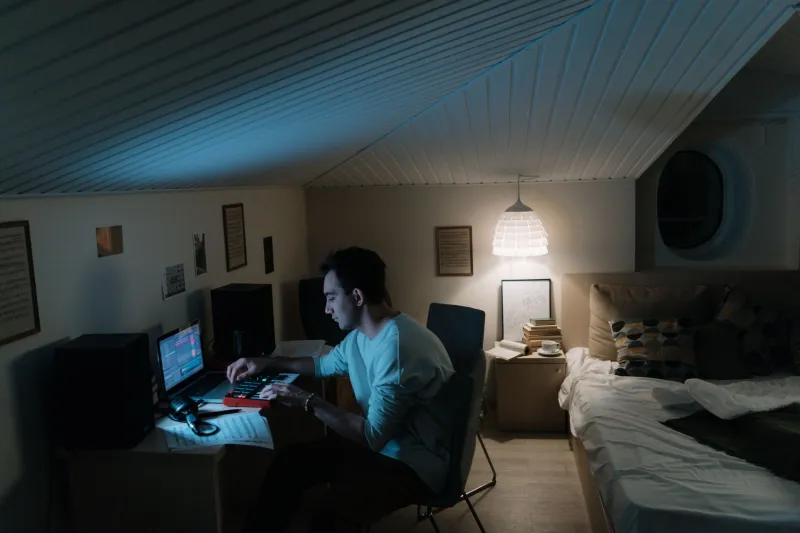
Producer and beatmaker Darius Kellan, who's worked with several independent artists over the last decade, says he actually makes music with late-night listeners in mind.
"I think about the person alone in their room," he said. "Not the club, not the gym, not the morning commute. I'm thinking about someone who needs to feel understood at an hour when they can't call anyone. That changes every production choice I make — the space in the mix, the reverb on the vocals, even the tempo."
The Community That Doesn't Sleep
There's a whole subculture online built around this shared experience, and if you haven't found it yet, you're missing out. Late-night listening threads on Reddit, "3 AM playlist" communities on TikTok, Discord servers where people share what they're listening to at unholy hours — these spaces have become genuinely meaningful to the people in them.
Jamila, a 24-year-old from Atlanta who goes by @midnightjams online, has been running a late-night music sharing account for two years. She posts what she's listening to every night between midnight and 4 AM, usually with a few words about what the song is doing to her emotionally.
"People DM me all the time saying they feel less alone because of those posts," she said. "There's something about knowing someone else is awake, listening to the same song, feeling the same thing. It's like a secret club."
That sense of intimacy is real and it's not nothing. Mental wellness researchers have noted that music listening in late-night hours can serve as a form of emotional regulation — a way to process feelings that the busyness of the day doesn't leave room for.
When Discovery Becomes Personal History
Here's the thing about late-night music discovery that nobody talks about enough: the songs you find in those hours tend to stick. They become anchored to specific memories, specific emotional states, specific moments in your life in a way that a song you hear during your lunch break just... doesn't.
There's a psychological concept called "state-dependent memory" — the idea that we recall information more vividly when we're in the same emotional or physical state we were in when we first encountered it. Late-night listening, with its heightened emotional openness, creates unusually strong memory anchors.
That song you discovered at 3 AM during a hard week three years ago? It's going to hit you the exact same way every single time you hear it. That's not nostalgia. That's neuroscience.
How to Make the Most of Your Late-Night Sessions
If you're a natural night owl who already lives for these hours, you're probably nodding along to everything here. But if you want to be more intentional about your late-night listening, a few things can genuinely deepen the experience.
Kill the notifications. The moment your phone buzzes with a text or an Instagram alert, you're pulled out of the listening headspace completely. Do Not Disturb is your best friend after midnight.
Let autoplay run. Some of the best late-night discoveries happen when you stop curating and just let an algorithm or a playlist carry you somewhere unexpected. Surrender a little control.
Write down what you find. Keep a note on your phone — just the song title, the artist, maybe one word about how it made you feel. You'll thank yourself later.
Use headphones. This sounds obvious, but the difference between speakers and a good pair of headphones at 2 AM is the difference between watching a movie and being inside it.
The Honest Hours
Maybe the real reason late-night listening hits so hard is simpler than all the science and the cultural analysis. At 3 AM, you're just you. No performance, no audience, no version of yourself you're trying to project. It's just you and whatever a song is trying to say.
And in those honest hours, music gets to be exactly what it was always supposed to be — something that makes you feel less alone in whatever you're carrying.
So tonight, when the house gets quiet and the playlist starts doing its thing, let it. The songs you find in the dark might be the ones that stay with you the longest.